Introduction
Estimated reading time: 14 minutes
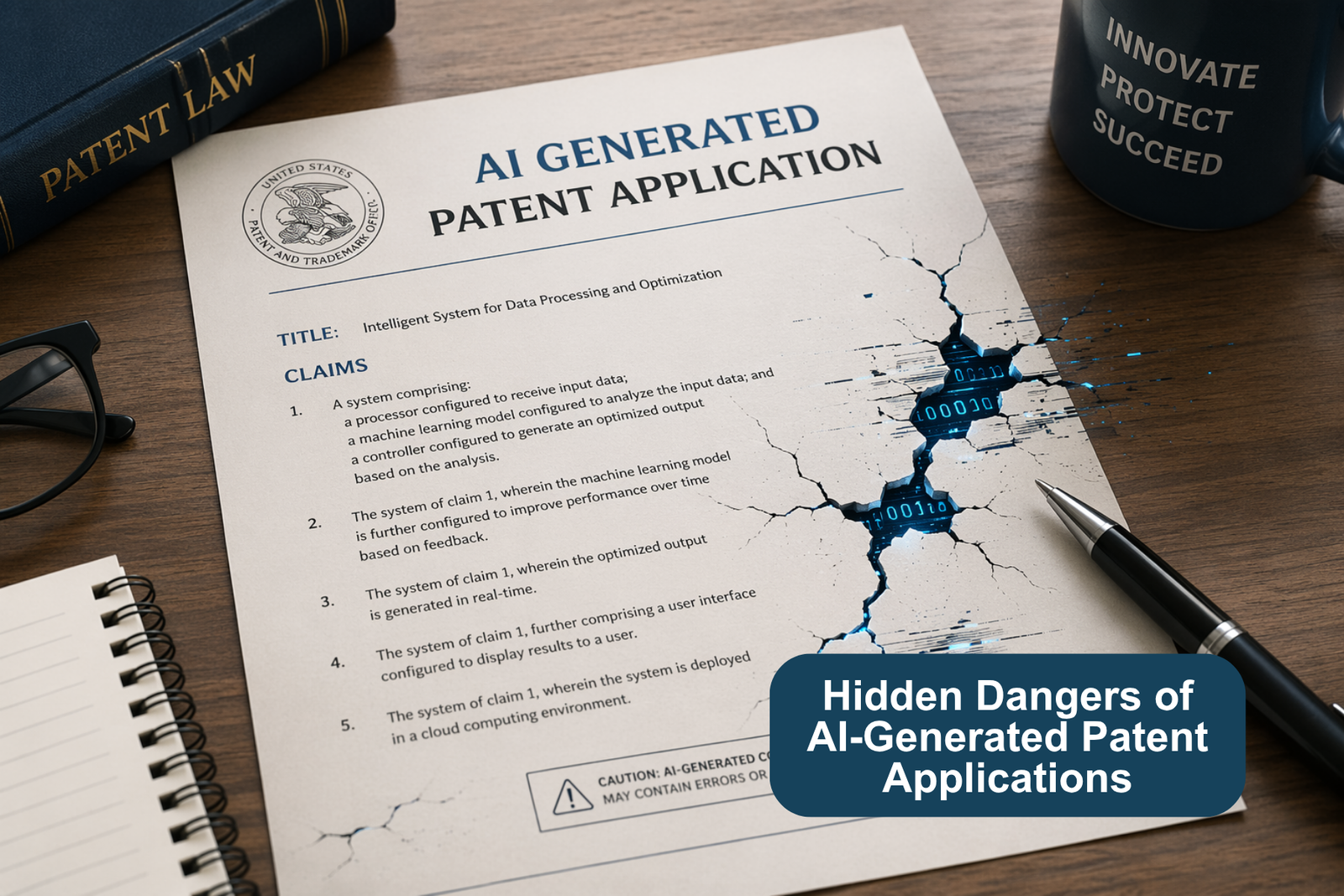
Artificial intelligence has made it easier than ever to turn an idea into a polished-looking document. That can be helpful. It can also be risky, especially in patent law, where a few missing details can make the difference between meaningful protection and a document that mostly looks official. For inventors, the danger is not that AI tools are useless. The danger is that they can sound confident while quietly leaving important legal and technical gaps behind.
A patent application is not just a description of an invention. It is a legal and technical document that must explain what the invention is, how it works, and what the inventor is actually claiming as protected. If that foundation is weak, the application may be rejected, narrowed, or become difficult to enforce later. That is why AI-generated patent applications deserve careful review before anyone relies on them.
What Are AI Generated Patent Applications
AI-generated patent applications are patent drafts created with artificial intelligence tools based on information supplied by the inventor. These tools may attempt to write claims, background sections, technical descriptions, and summaries by drawing on patterns from existing patents and other training material. In plain English, the software tries to imitate the structure and language of a patent application.
That can be useful as a starting point, but it is not the same as strategic patent drafting. A helpful analogy is to think of AI as a newly graduated chef and a patent professional as the experienced chef who has survived the dinner rush, the health inspector, and that oven in the corner with a trick to getting it to work. The new chef may know the recipes and terminology, but experience teaches judgment. In patent drafting, judgment matters because the application must support the invention legally, technically, and commercially.
AI-drafted patent applications often create a false sense of security. They may look polished, use formal language, and include sections that resemble real patent documents. The problem is that patent protection depends on polish AND substance, not just polish. Experienced patent agents and intellectual property attorneys know how to connect the technical details of the invention with the legal requirements that determine whether the application has a realistic chance of becoming useful protection.
Why This Matters for Inventors
For inventors, a weak patent application can become expensive in several ways. Filing fees may be wasted if the application is rejected for issues that could have been addressed before filing. The application may also provide protection that is too narrow, too vague, or too easy for competitors to avoid. In the worst cases, the original filing may not include enough detail to fix the problem later.
The United States Patent and Trademark Office, often called the USPTO, reviews thousands of applications. Patent examiners are trained to spot unsupported claims, vague descriptions, and missing technical detail. Some problems can be repaired during examination, but not all of them. If the original filing does not adequately describe the invention, an inventor may need to re-file, lose valuable time, or risk losing patent rights altogether.
Analysis of Common Problems
Problem 1: Inadequate prior art analysis. Prior art means earlier patents, publications, products, or public information that may affect whether an invention is new or non-obvious. AI tools may perform a surface-level search, but patent searching is more than typing a few keywords into a database and hoping the universe is feeling cooperative.
A professional search looks for related concepts, alternative terminology, similar technical structures, and references that may not use the same words as the inventor. Patent examiners use specialized tools and search strategies, and they often find references that an AI-generated draft never considered. If the application is built around an incomplete understanding of the prior art, the claims may be too broad, too narrow, or aimed at the wrong point of novelty. This can waste time and money getting to a granted patent.
Problem 2: Generic claim language. Claims define the legal boundaries of the invention. If the patent application were a fence, the claims would mark where the property line is. AI tools often produce claims that sound broad and impressive but fail to identify the specific technical features that make the invention different.
For example, an AI draft might describe a “means for processing data” without explaining what is being processed, how the processing occurs, or what technical improvement results. That kind of language can create problems because patent claims need clear support in the written description. Generic claims are easier to reject, easier to design around, and harder to enforce. The breadth of each word and phrase is intentional and can mean the difference between a competitor easily side stepping your patent or being prevented from easily competing.
Problem 3: Missing technical specifications. A patent application must teach others how to make and use the invention. This requirement is called enablement, which simply means the application must provide enough information for a skilled person in that field to understand and reproduce the invention without excessive guesswork.
AI tools often struggle with the relationships between components, software modules, hardware elements, data flows, and process steps. This is especially true for software patents, where the details of how the system improves computer functionality or solves a technical problem can be critical. A draft may mention a feature in passing but fail to explain how it actually works.
Common omissions include incomplete software architecture, incomplete hardware descriptions, missing process flow explanations, missing broadening language that captures alternative embodiments, and figure descriptions that do not line up with the written specification. These gaps can lead to enablement or written description rejections. Written description is the requirement that the application must show the inventor actually possessed the claimed invention at the time of filing.
The specification is the backbone of any patent you get granted, as the claims are read in light of the specification. Meaning if you ever go to litigation to sue an infringer, the courts will look to your specification to determine how to interpret your claims.
Problem 4: Improper claim structure. Patent claims follow specific rules. An independent claim stands on its own, while a dependent claim refers back to another claim and adds more detail. AI tools sometimes mix these structures, introduce unclear terms, or create claim sets that do not follow a logical hierarchy.
These mistakes may sound technical, but they matter. If a claim is indefinite, meaning unclear enough that its boundaries cannot be reasonably understood, the USPTO may reject it under 35 U.S.C. § 112. That section of the patent statute also covers written description and enablement issues. In short, the claims must be clear, supported, and properly connected to the rest of the application.
Problem 5: Claims that are too narrow or too broad. Good patent claims need balance. If the claims are too narrow, competitors may be able to make small changes and avoid infringement. If the claims are too broad, they may read on the prior art, lack support, or cover subject matter that is not patent eligible.
AI tools often have trouble finding that middle ground. They may lock onto one embodiment, which is one specific version of the invention, and forget to describe reasonable alternatives. Or they may swing too far in the other direction and claim the general idea without enough technical support. Neither approach is ideal. Strong patent drafting usually includes a thoughtful range of claim scope, fallback positions, and alternative implementations.
Problem 6: Weak § 101 and Alice support. Arguably one of the biggest challenges to software patent applications. Section 101 refers to the part of U.S. patent law that deals with patent eligibility, or whether the type of invention is eligible for patent protection. For software and business method inventions, courts often apply the Alice test, named after the Supreme Court case Alice Corp. v. CLS Bank. In plain English, Alice asks whether the claims are directed to an abstract idea and, if so, whether they add enough specific technical substance to be patent eligible.
This is an area where AI drafts often struggle. They may describe the invention as a business goal or high-level result instead of explaining the technical improvement. For software inventions, the application should usually explain how the system improves computer functionality, data processing, security, speed, reliability, interface operation, or another technological aspect. Without that support, the application may face a § 101 rejection that is difficult and expensive to overcome. The USPTO estimates that for affected application types, including software, there is a 20% chance of receiving a 101 Alice rejection. Some areas, such as business methods, face even higher rates.
Read more about 35 U.S.C. §101 Alice from the USPTO.
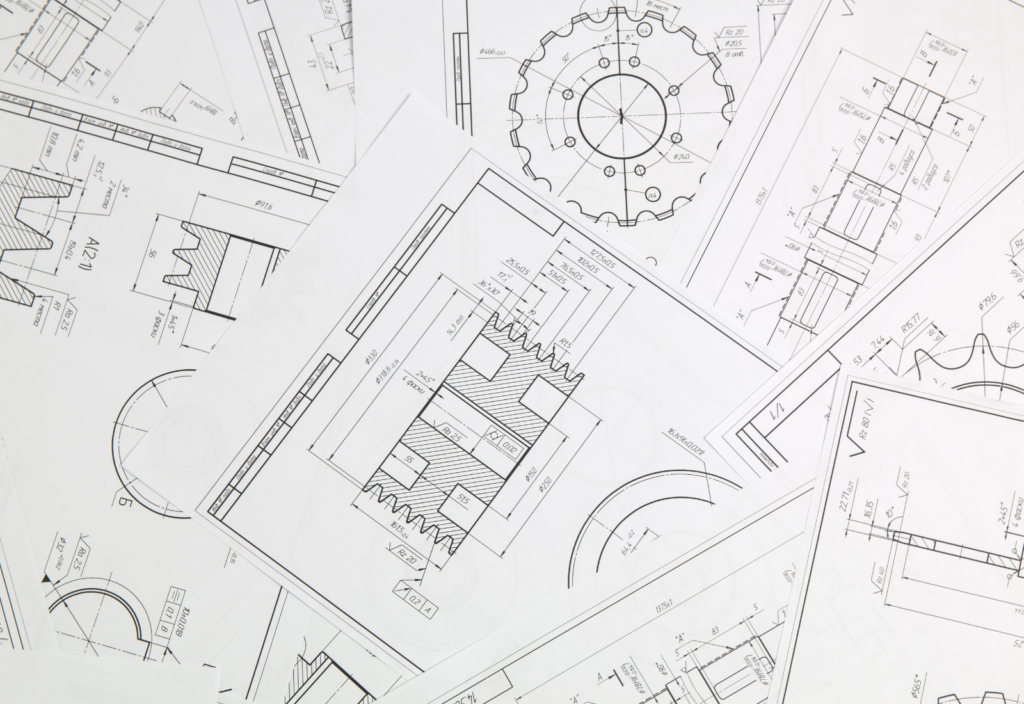
Problem 7: Non-compliant drawings. Patent drawings must follow USPTO requirements. For utility patent applications, drawings often need proper line quality, reference numerals, figure labels, margins, and written descriptions that match in the specification. AI-generated drawings or loosely prepared figures may look helpful but still fail formal requirements.
AI-generated applications often come with drawings that violate USPTO formatting and content requirements under 37 CFR 1.84.
Drawing problems can delay examination and add unexpected costs. Missing reference numbers, inconsistent labels, photographs used where line drawings are required, or figures that do not match the written description can all create trouble. Drawings are not decorative extras. In many applications, they are part of how the invention is disclosed and supported.
Problem 8: Inconsistent terminology. Patent applications reward consistency. If the specification calls something a “control module,” the claims call it a “processing unit,” and the drawings label it as a “controller,” confusion can follow. Sometimes those terms may refer to the same thing. Sometimes they may not. Either way, inconsistency gives examiners and future challengers something to question.
AI tools are especially prone to this because they generate text based on patterns rather than a stable claim strategy. A human drafter can choose terminology intentionally, define important terms, and make sure the claims, drawings, and description all tell the same story. That may not sound glamorous, but in patent work, consistency is a quiet superpower.
Problem 9: Inadequate freedom to operate analysis. Freedom to operate, often shortened to FTO, is a separate question from whether your invention can be patented. It asks whether making, using, or selling your product might infringe someone else’s existing patent.
AI tools cannot reliably perform a full FTO analysis. A patent may be granted on an improvement even if practicing that improvement still requires permission from the owner of an earlier patent. That surprises many inventors, but it is a real issue. A granted patent gives you the right to exclude others from your claimed invention. It does not automatically give you the right to sell a product without considering other patents.
Common Mistakes Inventors Make with AI Tools
The most common mistake is treating AI output as a finished patent application. A draft can look complete because it has headings, claims, a summary, and formal language. But a patent application is not graded on how official it looks. It is evaluated based on whether it satisfies legal requirements and supports useful claim coverage.
Another common mistake is relying on AI for the prior art search. AI can be helpful for brainstorming search terms or organizing information, but it should not replace a serious search through patent databases and relevant non-patent literature. Inventors also sometimes underestimate software patent issues, especially eligibility under § 101 and Alice. These issues require more than clean wording. They require technical framing from the beginning.
Cost is another understandable concern. AI tools can feel attractive because they seem inexpensive at first. But if the draft needs major repair, the savings can disappear quickly. In some cases, fixing a weak draft costs more than having the application drafted properly from the start. That is not because patent professionals enjoy making things complicated. The patent system already handled that part.
When to Contact a Patent Agent
A patent agent or intellectual property attorney can help before filing, after an AI draft has been prepared, or after the USPTO issues an office action. An office action is a written response from the patent examiner explaining rejections, objections, or other issues with the application.
It is especially wise to get professional help if the invention involves software, artificial intelligence, fintech, hardware-software interaction, medical devices, electronics, or any technology where the details matter. Professional guidance is also valuable if you need a prior art search, want to understand freedom to operate risks, or want claims that support a real business strategy rather than just a filing receipt.
Patent agents registered with the USPTO have technical backgrounds and are authorized to prepare and prosecute patent applications before the USPTO. Patent attorneys can also provide broader legal services, including certain legal opinions and litigation-related advice. For many inventors, a patent agent can be a cost-effective option for drafting, reviewing, and responding to USPTO issues.
Professional Patent Alternatives
Budget matters. Many inventors are trying to protect an idea while also paying for product development, marketing, prototypes, and the many small expenses that seem to reproduce overnight. If a full patent attorney draft is not financially realistic, working with a registered patent agent may offer a more manageable path while still bringing technical and legal experience into the process.
For inventors who already used AI to prepare a draft, a professional review can still be valuable. A qualified patent practitioner can look for unsupported claims, missing technical details, inconsistent terminology, weak § 101 support, and other issues before the application is filed.
Have an idea worth protecting?
Protecting your ideas doesn’t have to be overwhelming. We’ll help you understand your options and build a strong patent strategy. Get expert guidance from a former USPTO examiner. With over a decade of experience, our patent agents provide personalized support and guidance every step of the way. From the first consultation to long‑term intellectual property protection, our mission is to simplify the process and safeguard your innovations. Crafted IP specializes in software, artificial intelligence, graphical user interfaces (GUI), autonomous vehicles, drones, robotics, and navigation system patent applications.
Conclusion
AI tools can be useful, but they are not a substitute for experienced patent drafting. The most serious problems with AI-generated patent applications are usually not obvious at first glance. They often hide in the claims, the missing technical details, the weak support for software eligibility, the inconsistent terminology, or the failure to account for prior art.
For inventors, the safest approach is not necessarily to avoid AI altogether. The better approach is to understand what AI can and cannot do. It can help organize thoughts. It can help generate a rough draft. It can sometimes help identify questions worth asking. But it cannot reliably replace the technical judgment, claim strategy, and legal experience needed to build strong patent protection.
Next Steps
Before filing an AI-generated patent application, consider having it reviewed by a qualified patent agent or intellectual property attorney. A professional review can identify gaps while there is still time to correct them. That extra step may save money, reduce prosecution problems, and improve the odds that the application protects the invention you actually care about.
Strong patents require more than confident wording. They require technical precision, legal support, and a strategy that fits the invention. For now, those qualities remain very human, which is probably good news for attorneys and mildly inconvenient news for robots.
Frequently Asked Questions
Can AI completely replace patent attorneys or patent agents?
No. AI can assist with research, organization, and early drafting, but it does not replace professional judgment. Preparing and prosecuting a patent application, meaning guiding it through USPTO examination, requires technical analysis, legal strategy, and careful claim drafting.
How much do professional patent services cost compared to AI tools?
Costs vary based on the complexity of the invention, the number of drawings, the amount of prior art involved, and the level of drafting required. AI tools may be cheaper upfront, but they do not provide the same level of analysis or accountability. A lower initial cost can become expensive if the draft needs major revision or if important protection is lost after filing.
What should I look for when searching for patent help?
The USPTO provides a patent attorney and patent agent search tool for finding registered practitioners. Look for someone with experience in your technology area, clear communication, and a willingness to explain risks in plain English. A good practitioner should not simply promise that everything is patentable. They should help you understand strengths, weaknesses, and practical options.
Can I use AI tools as a starting point?
Yes, but treat AI as a drafting assistant, not as the final authority. AI can help organize ideas or create an initial outline. Before filing, a qualified patent professional should review the application for technical support, claim scope, eligibility issues, drawing consistency, and USPTO compliance.
How do I know if my AI-generated application has problems?
Warning signs include generic language, missing implementation details, claims that do not match the description, inconsistent terminology, unsupported software functionality, and little or no prior art analysis. Even the best AI generated patent applications will have some identifiable issues, many of which are not recognizable by a lay person or AI.